Excerpt:
Homomorphic encryption lets users run queries/compute on encrypted data without revealing the unencrypted data to the operating process.
As a privacy enhancing technology it has scope across many applications. [...]
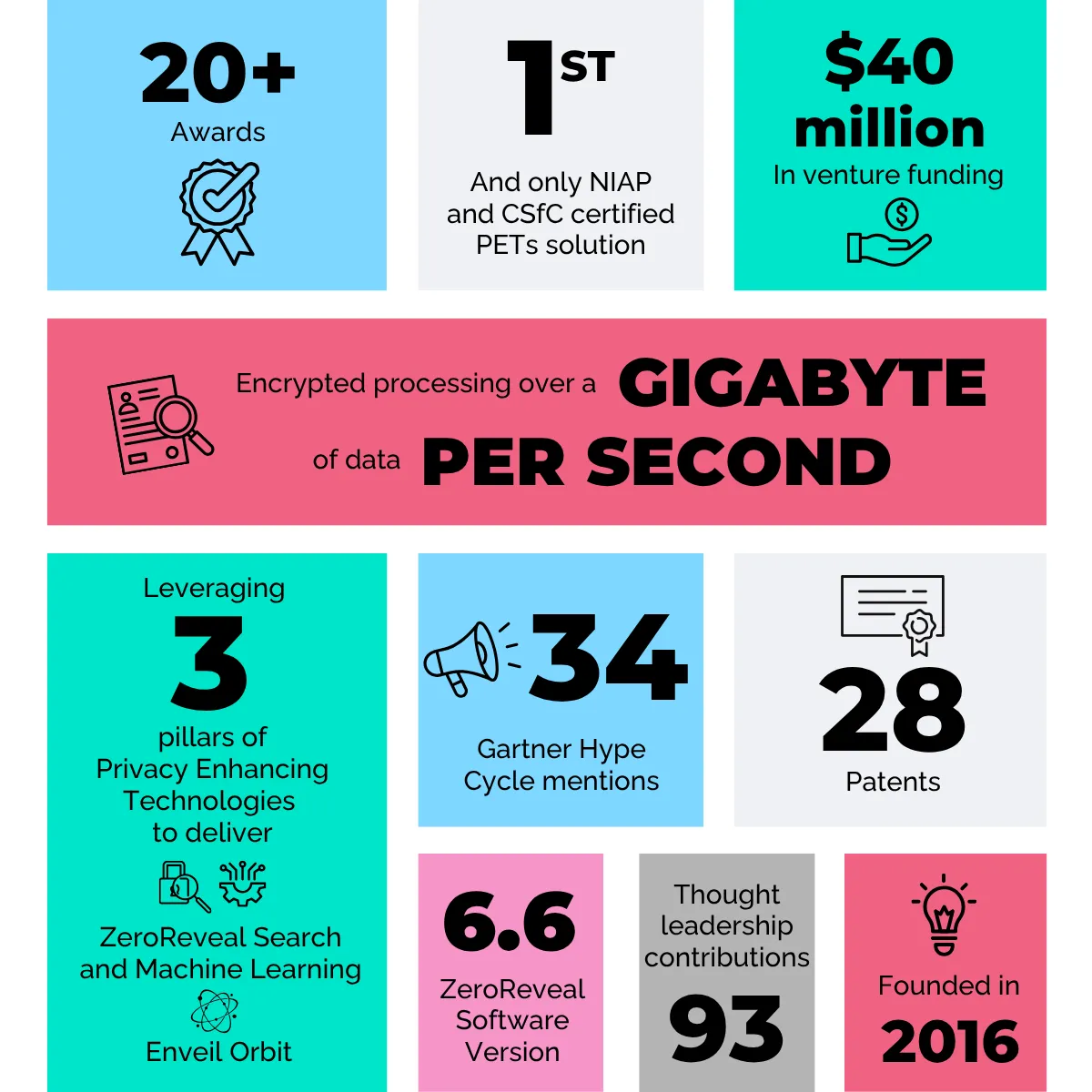
One to watch: Homomorphic encryption specialist Enveil
As an industry itself however numerous companies continue to work closely both on the research and application delivery side here.
One of them is Enveil CEO Ellison Anne Williams.
She told The Stack: “It’s fantastic to see Apple’s recognition of the transformative power of homomorphic encryption… As a foundational pillar of the Privacy Enhancing Technology family, HE’s unique ability to protect data while it’s being utilized has the potential to shift the way we use data on a broad scale by expanding the field of usable data sources.
“Organizations that can securely leverage data across jurisdictions as well as organizational and security boundaries in ways that were previously not possible will gain advantage in a data-driven market when every input matters. Business leaders who want to be ahead of the privacy and security curve need to pay close attention…” she added by email.
“Over the last year, we’ve seen global leaders including the White House, CISA, and NCSC release action-oriented directives aimed at recognizing and mitigating AI risk. Many of these guiding documents pointed toward adopting technology-powered solutions such as Privacy Enhancing Technologies (PETs) for their unique ability to provide model-centric security and protection. When used for encrypted model training and evaluation, the Secure AI capabilities enabled by PETs allows users to unlock value from cross-silo data sources without increasing organizational risk, compromising sensitive data, or sacrificing our values.”
Williams was keen to emphasize that there is a “significant difference between an HE library and an HE-powered solution… Homomorphic encryption libraries provide the basic cryptographic components for enabling the capabilities, but it takes a lot of work including software engineering, innovative algorithms, and enterprise integration features to get to a usable, commercial grade product,” she told The Stack.
Read full article here.