Stakeholders recognize data sharing is the answer in the fight against fraud so why aren’t we doing it at scale?
By Freddie Milles, Enveil's Head of Strategic Partnerships, EMEA
The recently published UK Government Home Office Fraud Strategy is a welcome step forward. It reinforces a point that practitioners across the ecosystem have been flagging for years: modern fraud is not confined to any single institution or sector, and industry stakeholders must collaborate more widely and more effectively in order to prevent it.
It is a well-known problem: bad actors operate across financial services, telecommunications infrastructure, online platforms and digital marketplaces simultaneously with ease – those trying to combat the criminal activity don’t. So it is no surprise that every event panel, roundtable, white paper and strategy document reaches the same conclusion: data collaboration at scale is the key to fraud prevention.
Fraud Efforts Underway
The UK already has a number of successful intelligence sharing initiatives that cut across sectors and the public-private divide, but do they go wide and deep enough to tackle the scale of the problem? Many of the most valuable fraud signals sit in sensitive datasets that institutions are, quite rightly, reluctant to share. However, when combined, these signals can reveal patterns no single organization can detect alone. Fraudsters today operate as a network – coordinated, adaptive and spanning sectors. To counter it, defenders must operate in the same way. The adage “it takes a network to defeat a network” rings true.
So unlocking these signals across organizations is essential to improving both the detection and prevention of economic crime at scale, but the reality is more complex. Organizations are not mandated to share, and the risks of doing so are significant. Even where legal gateways exist, uncertainty remains around how they can be used in practice and whether organizations will be adequately protected. The result is a persistent gap between the recognized need for collaboration and the ability to deliver it at scale.
A Technology-Enabled Solution
Privacy Enhancing Technologies (PETs) offer a way through this. PETs enable analysis across distributed datasets without aggregating or exposing the underlying sensitive data. Crucially, PETs protect data while it is being used or processed (not just at rest or in transit) mitigating legitimate concerns around data privacy, confidentiality, regulatory scrutiny and commercial sensitivity, allowing organizations to collaborate with confidence.
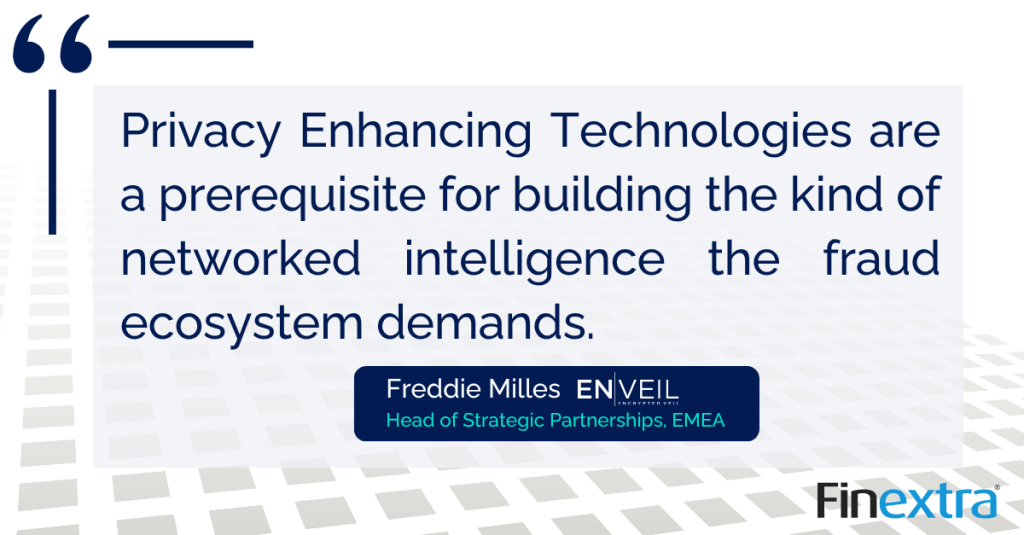
PETs have long been tipped as a key enabler to address this exact challenge, but as highlighted by the ICO in their paper “Tackling barriers to privacy-enhancing technologies adoption”, adoption remains low due to a combination of limited awareness, technical capability gaps and ongoing uncertainty around their applications. Yet if collaboration at scale is the objective, then addressing these barriers is no longer optional. PETs are a prerequisite for building the kind of networked intelligence the fraud ecosystem demands.
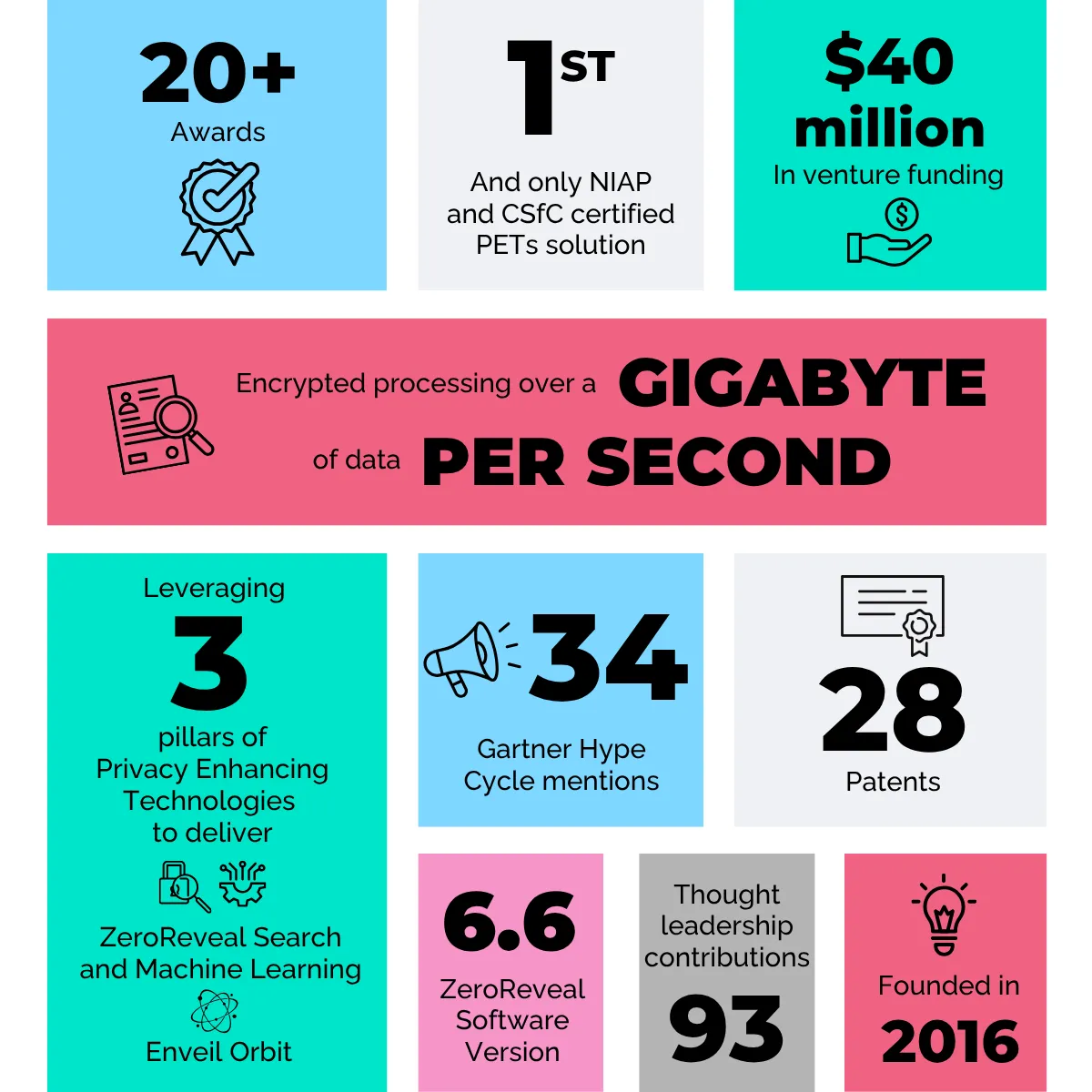
Enveil is a pioneering Privacy Enhancing Technology company protecting Data in Use. Enveil’s business-enabling capabilities change the paradigm of how and where organizations can leverage data to unlock value. Defining the transformative category of Privacy Enhancing Technologies (PETs), Enveil’s award-winning ZeroReveal® and Enveil Orbit® solutions for secure data usage, collaboration, monetization, and Secure AI protect the content of the search, analytic, or model while it's being used or processed. Customers can extract insights, cross-match, search, analyze, and leverage AI across boundaries and silos at scale without exposing their interests and intent or compromising the security or ownership of the underlying data. A World Economic Forum Technology Pioneer and Gartner Cool Vendor, Enveil is deployed and operational today, revolutionizing data usage in the global marketplace.