Economic crime will continue to evolve, but with stronger collaboration, better data sharing and increased use of cutting-edge technology, the financial sector can build a more resilient and secure future.
Excerpt;
Economic crime is a growing global challenge, costing businesses and governments billions each year. Despite efforts to combat fraud, money laundering and financial misconduct, criminals continue to exploit regulatory gaps and outdated technology.
A recent report by Global Counsel and Enveil highlights a crucial solution: improved data sharing between financial institutions, regulators and law enforcement.
With economic crime on the rise, leveraging technology and fostering collaboration are essential to creating a safer, more transparent financial ecosystem.
The Cost of Economic Crime
Economic crime imposes staggering costs on the global economy. In the UK alone, it is estimated to cause annual losses of over £8.5 billion, with fraud accounting for more than £1 billion of that figure.
The true impact extends beyond financial losses, with victims experiencing emotional distress and long-term repercussions. Despite these figures, combating economic crime has not always been a political or regulatory priority.
However, as technology-enabled fraud becomes more sophisticated, urgent action is needed.
The Challenges of Combating Financial Crime
One of the most significant obstacles to tackling economic crime is the fragmented nature of fraud prevention efforts. Various agencies, including banks, law enforcement, and regulatory bodies, collect vital data, but a lack of coordination prevents them from sharing intelligence effectively. This disjointed approach allows criminals to exploit regulatory loopholes and remain undetected.
Four primary barriers to effective data sharing have been identified:
Lack of clear incentives – Many firms hesitate to participate in data-sharing initiatives due to compliance costs and regulatory risks. Without a clear framework, companies fear legal repercussions from sharing sensitive information.
Legal ambiguity – Uncertainty around data privacy laws creates hesitation among businesses. Financial institutions require clearer legal definitions and guidance to mitigate potential liabilities.
Limited adoption of new technologies – Criminals rapidly adapt to new technologies, while financial institutions are often slow to adopt advanced tools like Privacy Enhancing Technologies (PETs).
Fragmented data-sharing landscape – Existing initiatives lack consistency in governance and data-sharing standards, making participation difficult and costly for businesses.
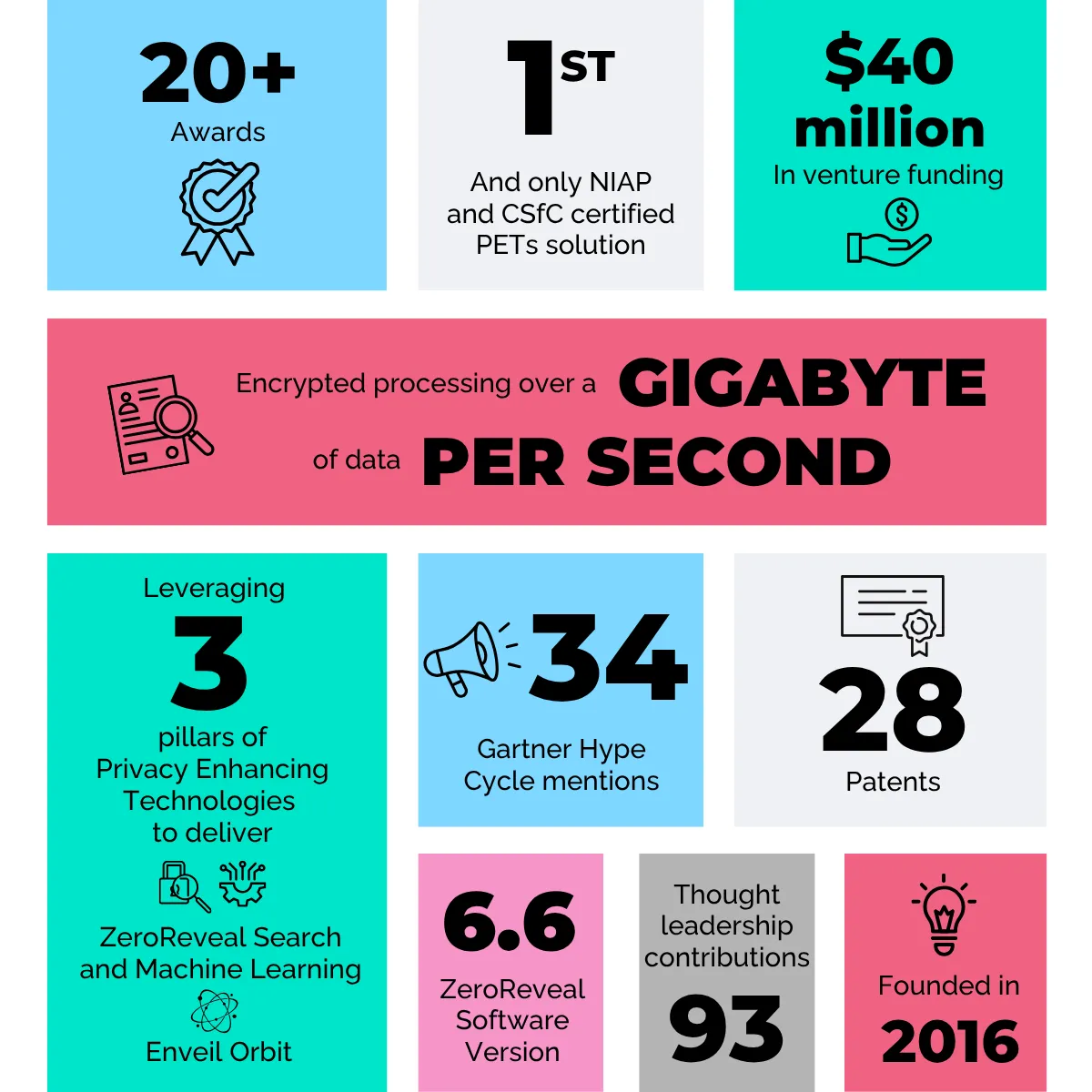
Enveil is a pioneering Privacy Enhancing Technology company protecting Data in Use. Enveil’s business-enabling capabilities change the paradigm of how and where organizations can leverage data to unlock value. Defining the transformative category of Privacy Enhancing Technologies (PETs), Enveil’s award-winning ZeroReveal® and Enveil Orbit® solutions for secure data usage, collaboration, monetization, and Secure AI protect the content of the search, analytic, or model while it's being used or processed. Customers can extract insights, cross-match, search, analyze, and leverage AI across boundaries and silos at scale without exposing their interests and intent or compromising the security or ownership of the underlying data. A World Economic Forum Technology Pioneer and Gartner Cool Vendor, Enveil is deployed and operational today, revolutionizing data usage in the global marketplace.