In honor of International Fraud Awareness Week, we’re highlighting the important role data plays in the fight against fraud.
According to estimates by Certified Fraud Examiners (CFEs), organizations lose 5% of their revenue annually due to fraud, and in some industries, those numbers are much higher.
In our digital-first world, data is the most critical asset to combat this activity. Financial institutions and other businesses rely on data to extract insights, identify unusual behavior and inform ongoing monitoring that can help stop and prevent fraudulent activity.
In this fight, the more data, the better. However, the ability to access and utilize all available data sources is anything but a straightforward endeavor. In many cases, regulations and guidelines put in place to help protect customers also unintentionally hamper investigators and empower criminals.
To effectively combat fraud and other forms of financial crime, organizations need to be able to leverage data while respecting regulatory barriers, jurisdictional silos, and security boundaries.
This challenge is being answered by technological breakthroughs, namely advances in Privacy Enhancing Technologies (PETs). PETs protect the usage of data, securing data while it’s being used or processed, and allow insights to be extracted across boundaries and silos while minimizing risk.
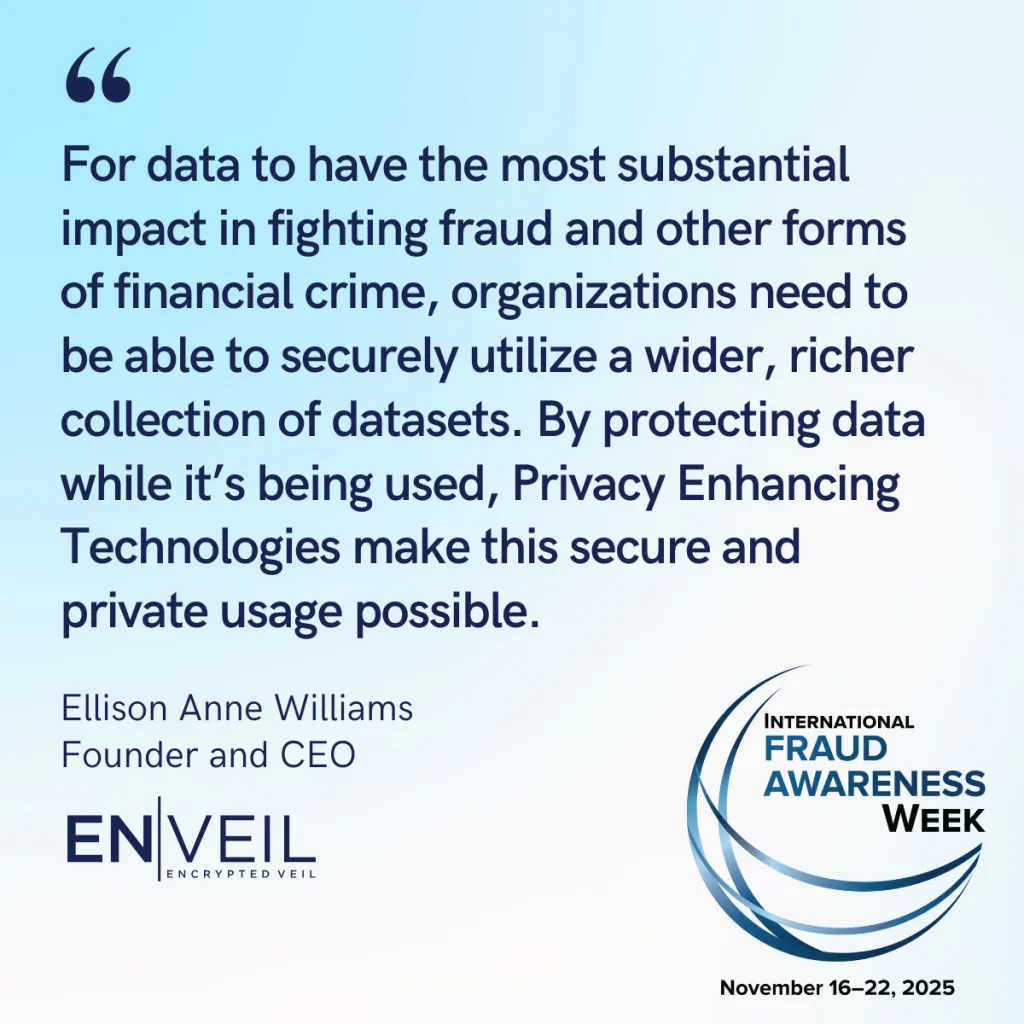
PETs allow data to have the most substantial impact by enabling organizations to securely utilize a wider, richer collection of datasets. That data may be sourced from various silos within an organization, branches across jurisdictional boundaries, third parties, and/or commercial data providers.
By protecting data while it’s being used, Privacy Enhancing Technologies enable users to securely and efficiently connect dots within the data to fight fraud in ways that were not previously possible.
To learn more about how PETs can help organizations leverage data to combat fraud, check out these resources: